Transmission Tower Bolts: High-Strength Bolting for Power Line Structures
---
Introduction: The Bolts That Hold the Grid Up
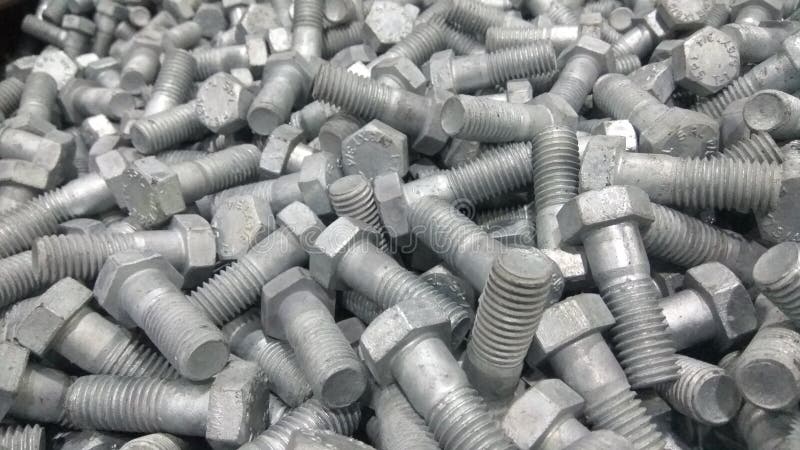
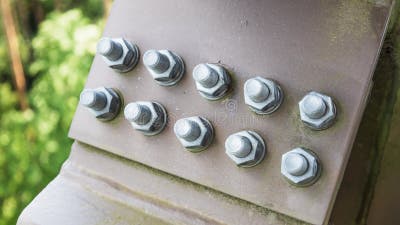
A steel lattice tower is assembled from thousands of galvanized angle members joined by hot-dip galvanized bolts. The tower is designed as a redundant structure, but every connection depends on bolts that must stay tight and corrosion-free for decades in remote locations where maintenance is rare and expensive.
For transmission line projects — from rural distribution to high-voltage bulk transmission — the bolting specification is part of the engineering standard, and the fastener quality is checked at two points: factory inspection before shipment, and field assembly. This guide covers the standards, the coating, and the specification details that prevent tower bolt problems.
Section 1: The Standards That Govern Tower Bolting
Transmission tower bolting is specified to national and international structural standards:
- GB/T 3098.1 — mechanical properties of bolts, screws, and studs (the Chinese general mechanical property standard, aligned with ISO 898-1). For tower bolts, the common property classes are 4.8, 5.8, 6.8, and 8.8, with 8.8 used for higher-load connections and 4.8/5.8/6.8 for general lattice joints. Dimensional standards such as GB/T 5780/5782, and utility standards (DL/T, Q/GDW) are applied on Chinese-grid projects.
- GB/T 5780/5781 (or GB/T 5782/5783) — hex bolts with/without full thread, the dimensional standards used for tower bolting.
- ISO 898-1 / ISO 4014/4017 — the international equivalents referenced on projects following ISO practice.
- EN 14399 / EN 15048 — the European structural bolting families; EN 14399 for preloaded assemblies, EN 15048 for non-preloaded structural bolting (a common reference in European projects).
- ASTM F3125 / A394 (US practice) — referenced only where the project is engineered to US standards.
Key point: tower bolts are generally non-preloaded structural bolts — the connection is designed as a bearing-type joint, and the bolts are tightened snug-tight (or to a defined snug torque), not preloaded to a specified tension. This is different from wind tower flange bolts (EN 14399, preloaded) — a distinction that matters when the two are compared.
Beyond standard structural bolts, lattice towers use step bolts (climbing/step bolts for tower access, sized per the tower standard) and often locknut hardware for anti-loosening — both belong in the bolting bill of materials and should be included in the inquiry.
Section 2: Property Class Selection
| Connection type | Typical property class | Notes |
|---|---|---|
| General lattice connections (angles) | 4.8 / 5.8 | Galvanized, cost-effective, standard for most tower joints |
| Higher-load joints, leg splices | 6.8 / 8.8 | Where design loads require higher strength |
| Crossarm and critical connections | 8.8 | Where specified by the tower design |
Practical rules:
- Match the grade to the design drawing. The tower design specifies the bolt grade at each connection; substituting a higher grade is not automatically an improvement (it can change galvanizing and embrittlement risk), and substituting lower is a safety issue.
- Property class vs. material: for galvanized bolts in 4.8–8.8, the material and heat treatment must be compatible with hot-dip galvanizing (see Section 3).
- Marking: bolts must be head-marked with the manufacturer's mark and property class; field inspectors check markings against the standard.
Section 3: Hot-Dip Galvanizing — the Tower Bolt's Corrosion Armor
Tower bolts are almost always hot-dip galvanized:
- Coating standard: ISO 1461 (structural articles) and ISO 10684 (fasteners) for ISO-based projects; GB/T 5267.1 and the tower-specific standards for GB-based projects. For fasteners, ISO 10684 governs coating thickness and thread fit.
- Typical coating thickness: for M16–M24 tower bolts, average coating thickness commonly specified in the 40–65 µm range (depending on diameter and material thickness), with a minimum value stated.
- Thread fit: galvanized bolts need oversize-tapped nuts (the coating adds tens of microns per surface) — the nut is tapped oversize per ISO 10684 or the applicable standard (with defined tolerance classes such as ISO 965-5 6AZ/6G for metric, or the corresponding 2B overtapping allowance for inch-series) so the assembly fits and gauges correctly.
- Property classes and galvanizing: classes up to 8.8 are normally galvanized without issue; 10.9+ galvanizing is restricted (hydrogen embrittlement from pickling, temper effects at ~450 °C). Tower bolting almost never needs 10.9, so this is rarely a conflict. For high-strength tower bolting, specify de-embrittlement baking after galvanizing (per ISO 15330 / ASTM B696 practice) to minimize hydrogen-embrittlement risk from the acid-pickling step.
Section 4: Anti-Loosening — the Field Reliability Question
Vibration and wind load can loosen tower bolts over time. Modern transmission-tower practice relies primarily on joint design and clamping force; the common protections include:
- Double nuts / locknut systems (e.g., Palnut-type or Anco nuts) — the established anti-loosening hardware for lattice towers under wind vibration
- Thread deformation / punching (punching threads) — where the project standard specifies it
- Nylon-insert locknuts (e.g., ISO 7040/7042 or GB equivalents) — where the design allows and the galvanized system tolerates the insert temperature limits
- Thread adhesives — applied in the field where specified
- Spring washers — only where the project standard explicitly retains them; they are not recommended in high-vibration tower joints, where they can crack under cyclic load
The anti-loosening method is set by the tower design and the project's erection specification — the fastener supplier should confirm what the drawing calls for rather than substituting.
Section 5: Quality and Documentation That Grid QA Expects
Tower bolts are inspected at multiple levels; the documentation package matters:
- Material certificates to EN 10204 3.1 (or the equivalent) per heat
- Mechanical test reports: tensile, yield, hardness per lot
- Coating thickness reports: average and minimum values per lot
- Thread gauging records: ring gauges for bolts, plug gauges for nuts — critical for galvanized assemblies
- Galvanizing quality: adhesion, visual inspection for bare spots, roughness — per ISO 1461/10684 acceptance criteria
- Marking and traceability: head marks, lot codes, and traceability from heat to box
Many grid projects also specify third-party inspection at the factory (witnessing of tests and gauging) or at the galvanizer's line. A supplier that coordinates this without friction is part of the project's quality plan.
Section 6: Procurement Checklist for Tower Bolts
- Tower design standard and connection type (bearing-type, non-preloaded)
- Bolt size and length per the drawing (e.g., M16 × 45, M20 × 60, M24 × 80)
- Property class per the design (4.8 / 5.8 / 6.8 / 8.8)
- Galvanizing: ISO 10684 / ISO 1461 (or GB equivalent), coating thickness average + minimum
- Thread fit: oversize-tapped nuts to accept the coating
- Anti-loosening: as per drawing (double nut / locknut / nylon insert / none)
- Head marking requirements (manufacturer mark, class)
- Tests and documents: 3.1 MTCs, mechanical reports, coating reports, gauging records
- Third-party inspection requirements and the acceptance stage
- Packaging: boxed and marked by size/class, VCI where storage periods are long
---
FAQ
Q1: What property class are tower bolts? Most lattice tower bolts are 4.8–8.8 per GB/T 3098.1 (or ISO 898-1 equivalents), selected by the tower design for each connection. 8.8 is used for higher-load joints.
Q2: Are tower bolts preloaded like wind tower bolts? No. Tower lattice connections are typically non-preloaded (bearing-type): bolts are tightened snug-tight per the erection specification. Wind turbine tower flange bolts (EN 14399) are a different, preloaded system.
Q3: Why are tower bolts galvanized? Transmission structures live outdoors for decades with minimal maintenance. Hot-dip galvanizing gives the decades-long corrosion protection that plain steel cannot, and the zinc's roughness also increases thread friction, helping resist loosening.
Q4: Do galvanized tower bolts need special nuts? Yes — nuts are tapped oversize so the galvanized coating on the bolt threads doesn't prevent assembly. This is handled per ISO 10684 or the applicable standard.
Q5: Can I use 10.9 galvanized bolts on a tower? Tower designs rarely require 10.9. Galvanizing 10.9 bolts carries hydrogen-embrittlement and heat-treatment risks; follow the design's property class and the standard's restrictions.
Q6: What documents do I need for tower bolt deliveries? Material certificates per heat, mechanical test reports, coating thickness reports, thread gauging records, and lot traceability — the exact set is defined by the project's quality plan and inspection stage.
---
Need transmission tower bolting for your project? Send us the tower type, voltage level, and bolt schedule (or the tower drawing) with sizes, property classes, and galvanizing requirements, and we will confirm coating thickness, oversize-tapped nuts, head marking, de-embrittlement baking where applicable, and the full documentation package within one working day. Third-party inspection coordination and VCI sea-freight packaging are handled as standard for grid and EPC clients.