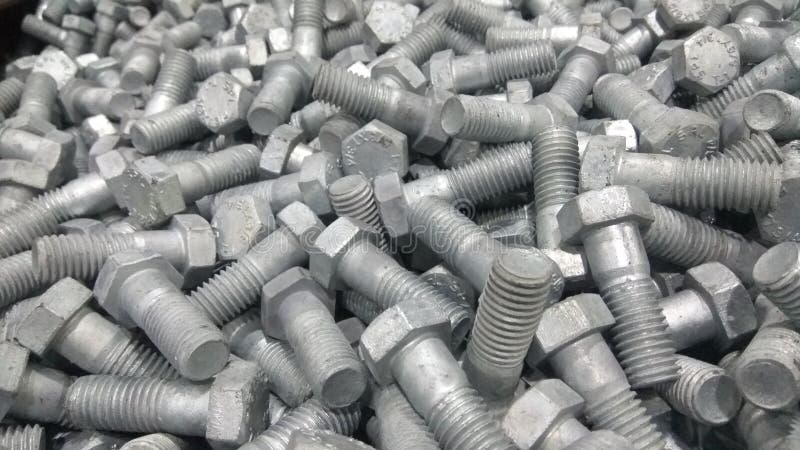
EN 14399-4 HV Nuts and Hardened Washers for Preloaded Structural Bolting Assemblies: Specification Guide
A preloaded structural bolted joint is designed around one number: the clamp load the bolt is stretched to. The bolt gets the attention on the drawing, but the joint loses that clamp load through the nut and the washers just as easily as through the bolt itself. A commercial nut that strips under preload, a soft washer that embeds into a steel flange, or a washer from a different lot with a different friction surface, all produce the same result — the erection crew torques the assembly to the table and never achieves the design preload.
On wind tower ring flanges, steel bridge girders and structural connections, the nut and washer are not bought as loose commodities. They are part of a qualified bolting assembly, and in European and international practice that assembly is defined by the EN 14399 series. WF Fastener manufactures EN 14399-4 HV nuts and EN 14399-5 / -6 hardened washers as matched components of preloaded structural bolting sets for turbine manufacturers, steel fabricators and EPC contractors across Europe, the Middle East and Southeast Asia. This guide covers what the HV nut and structural washer actually are, why they must be specified as a set rather than picked from a catalogue, and what a procurement engineer should check before approving a supplier.
WF Fastener HV Nut & Washer Quick Reference
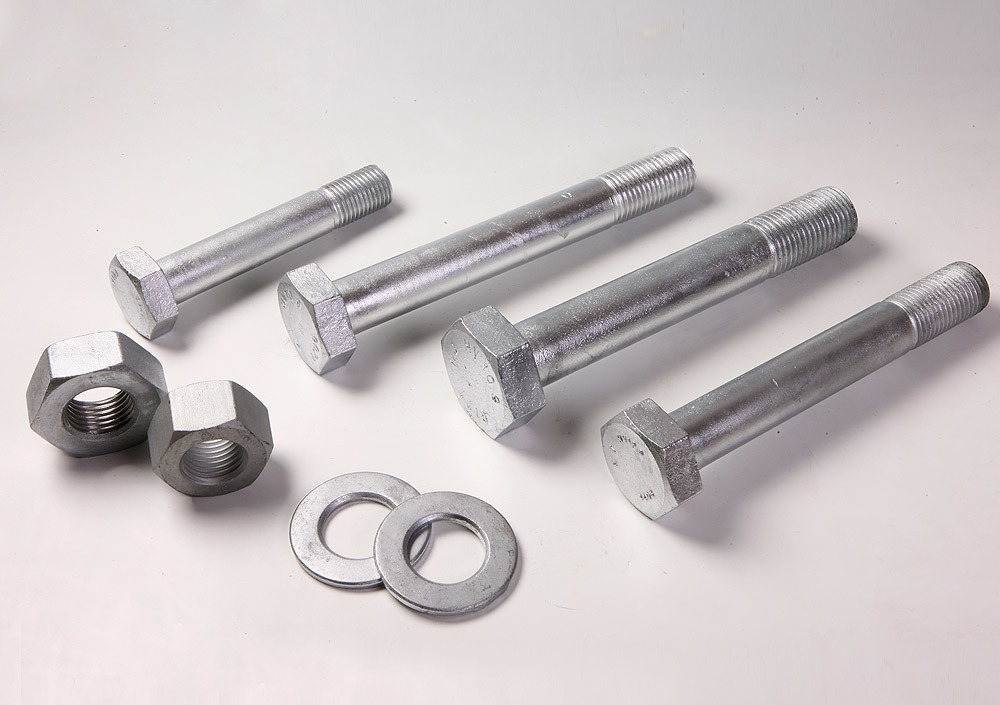
- Nut: EN 14399-4 system HV heavy hex nut, property class 10 (paired with 10.9 bolts)
- Washer: EN 14399-5 plain / EN 14399-6 chamfered hardened structural washer
- System: HV (heavy hex, larger across-flats) for preloaded structural bolting
- Hardness: nut per ISO 898-2 class 10; washer hardened to the hardness band specified in EN 14399-5 / -6
- Sizes: M12 to M64; M24–M42 covers most tower and structural flanges
- Coating: zinc flake per ISO 10683 (controlled friction) or HDG per ISO 10684
- Friction: measured on the bolt + nut + washer assembly per EN 14399-2
- Documentation: EN 10204 3.1, hardness, friction / preload calibration, coating records
1. Why the Nut and Washer Are Part of the Set
A preloaded structural bolt works because it is stretched into tension, clamping the two steel parts together in compression. The clamp load is what carries the joint: external loads act on the compressed interface, not on the bolt. If the nut strips, or the washer embeds into the connected part, that clamp load drops and the joint sees the alternating load directly — which is how fatigue cracks start at the thread runout.
The EN 14399 approach is to treat the bolt, nut and washers as one qualified assembly rather than three separate parts:
- EN 14399-1: general requirements for high-strength structural bolting
- EN 14399-2: suitability for preloading — the friction and preload test the assembly must pass
- EN 14399-3: system HR — standard hex bolt and nut
- EN 14399-4: system HV — heavy hex bolt and nut, with larger across-flats
- EN 14399-5: plain hardened washers for the system
- EN 14399-6: chamfered hardened washers for the system
The engineering point buyers miss: each component carries its own individual requirements, yet suitability for preloading is only established on the assembled set. The HV nut is dimensioned and proof-tested to pair with a 10.9 HV bolt (a nut-level requirement); the washer is hardened to a specific band so it does not embed under that preload (a washer-level requirement); and the friction coefficient between thread, nut face and washer is measured on the assembled set in EN 14399-2 (an assembly-level requirement that no single component can satisfy on its own). Substitute a visually similar nut or washer from another source and the measured friction no longer applies — the torque-preload table the erector uses is derived from the qualified set, and a mismatched washer quietly destroys the preload calibration.
For the bolt side of the set, our 42CrMo4 property class 10.9 wind tower bolts guide covers the bolt material, rolled threads and fatigue design. This guide covers the nut and washer that complete that set.
Cross-Atlantic comparison. Buyers who have worked on North American structural projects recognise the same idea under different numbers: where European practice uses the EN 14399 HV system (bolt + nut + washer qualified as an assembly per EN 14399-2), the equivalent North American route is ASTM F3125, which consolidates the previously separate A325 / A490 structural bolt grades into one standard that also treats the bolt, nut and washer as a matched assembly. The erection and inspection logic behind ASTM F3125 is set out in the RCSC Specification for Structural Joints Using High-Strength Bolts, and the design application is referenced through AISC (e.g. the AISC Steel Construction Manual). The two systems are broadly interchangeable in engineering intent — preloaded, fatigue-resistant, qualified-set bolting — but they are not directly interchangeable in hardware: thread tolerances, washer hardness bands and the friction/preload test protocols differ, so an EN 14399 HV nut or washer should not be substituted onto an ASTM F3125 joint without the specifying engineer's approval. If a project mixes European and North American scope, state which system governs each flange circle on the inquiry.
2. The HV Nut: Property Class 10, Heavy Hex Geometry
The HV nut in EN 14399-4 is a heavy hex nut, property class 10, designed to pair with a property class 10.9 bolt. The point that matters for procurement: EN 14399-4 defines the complete HV system — the heavy hex bolt together with this nut as an assembly — not merely a class 10 nut that happens to thread onto any catalogue 10.9 bolt. The bolt side must itself be the HV-system bolt per EN 14399-4, with its own dimensional, marking and suitability-for-preloading requirements; a generic commercial 10.9 bolt from stock is not automatically an HV-system bolt, and pairing the HV nut with such a bolt does not produce a qualified HV set. Two things distinguish the HV nut from a generic class 10 nut:
- Heavy hex geometry. The HV nut has a larger width across flats than a standard nut. That spreads the bearing load over a bigger area of the washer and the connected part, which matters at the high preload of a 10.9 bolt. A standard hex nut on a 10.9 set concentrates the load on a smaller bearing footprint.
- Property class 10 per ISO 898-2. The nut is heat-treated to a hardness band matched to the 10.9 bolt. The joint is engineered so the bolt yields in overload before the internal thread strips — the nut is proof-load sized to the bolt, not selected to be "stronger" in a raw stress comparison.
| Nut property (class 10, ISO 898-2) | Typical value |
|---|---|
| Mates with | Property class 10.9 bolt |
| Hardness | ~HV 260–360 band, controlled |
| Thread tolerance | 6H, gauged on the manufactured nut |
| Geometry | Heavy hex, EN 14399-4 system |
| Marking | Property class and manufacturer's mark on the nut face |
The proof-load logic is the same across the nut industry: a class 10 nut is the standard pairing for a 10.9 bolt. Pairing a 10.9 bolt with a class 8 nut — a cost-saving substitution buyers sometimes see quoted — overloads the internal thread and risks stripping at first tensioning. The nut class belongs on the inquiry, and it is checked at inspection.
3. The Hardened Structural Washer: EN 14399-5 and -6
The washer is the component most often treated as an afterthought, and the one most often responsible for preload loss. On a preloaded 10.9 joint, the nut rotates under several hundred kilonewtons of clamp load. A soft commercial washer under that load embeds — it squashes slightly over time — and that embedment relaxes the bolt.
The EN 14399-5 (plain) and -6 (chamfered) washers are hardened to a defined band so they do not embed under the design preload. Their functions:
- Spread the nut and bolt-head load over a larger area of the connected steel, preventing local crushing.
- Provide a controlled bearing surface under the rotating nut so the friction the torque table assumes is the friction actually measured on the set.
- Protect the connected part from galling and fretting as the nut turns.
The difference between plain (14399-5) and chamfered (14399-6) is geometry, not grade:
| Washer type | Standard | Face condition | Use |
|---|---|---|---|
| Plain hardened washer | EN 14399-5 | Flat on both faces | Under the bolt head and where both faces seat flush |
| Chamfered hardened washer | EN 14399-6 | One face chamfered | Under the rotating nut; chamfer faces the nut |
On orientation: the chamfered washer goes under the nut with the chamfered side against the nut, and the flat side against the connected part. The flat side gives full bearing against the steel; the chamfer clears the nut's under-head radius and burr. Getting this backwards does not fail immediately, but it changes the bearing contact and the friction behaviour, which is why the assembly procedure specifies the orientation.
A common and costly mistake is using a bright-plated commercial flat washer on a 10.9 structural set. It looks the same but is soft, unhardened and unmeasured. It embeds, loses preload, and the first the erector knows about it is a loosened flange after a few months of wind cycles.
4. Friction and the EN 14399-2 Preload Test
The whole point of qualifying the set is that friction is measured. In the relationship torque = K x F x d, K depends on the thread condition, the nut face, the washer surface and the coating. EN 14399-2 requires representative bolt + nut + washer assemblies to be tested so the friction coefficient is known and repeatable.
What this means on site:
- The erection crew uses a torque-preload table that comes from the tested set, not a generic handbook K-factor.
- The coating is part of the specification, because it sets the friction range.
- The nut and washer must come from the same qualified supply as the bolt. A different washer surface changes K, and the table no longer produces the designed preload.
| Coating | Standard | Friction behaviour | Notes on HV nuts and washers |
|---|---|---|---|
| Zinc flake (Geomet / Delta-Pro type) | ISO 10683 | Low, stable, defined range | Preferred for 10.9 sets; low hydrogen risk; thin film preserves gauging |
| Hot-dip galvanizing | ISO 10684 | Thicker, higher friction | Nuts over-tapped after galvanizing; friction scatter requires calibration |
| Electroplated zinc | — | Uncontrolled | Restricted on 10.9-class parts for hydrogen-embrittlement risk |
| Plain / phosphate oil | — | High, variable | Re-lubricated at assembly; friction must be re-baselined |
We cover the coating trade-off in depth in our zinc-flake coated bolts guide. For the nut and washer specifically, the practical rule is the same: state the coating standard and the target friction range on the inquiry, because the erection table is built around them.
5. Where HV Nuts and Washers Go
The dominant applications for EN 14399 HV nuts and washers in renewable energy:
Wind tower ring flanges
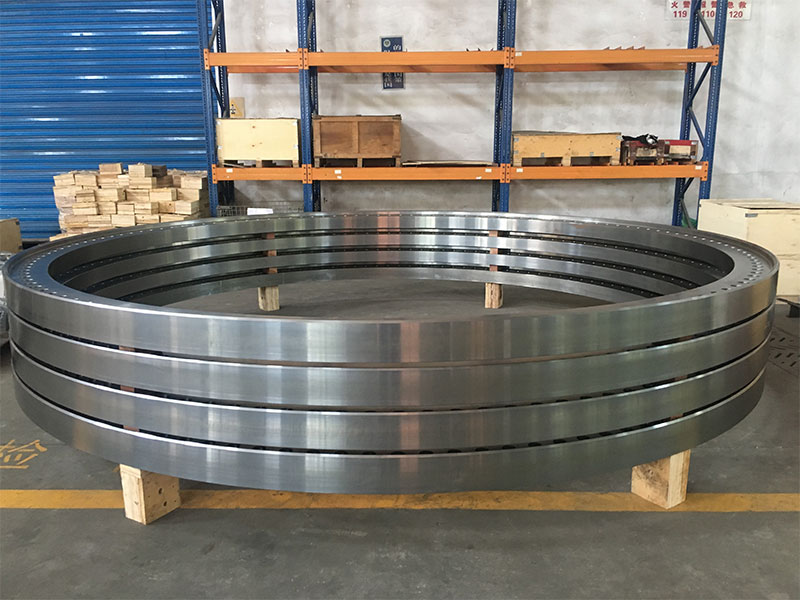
Tower sections are bolted circumferentially with 10.9 HV assemblies, typically 80–120 bolts per flange circle. Each bolt takes one HV nut and two hardened washers (one under the head, one under the nut). The high preload keeps the flange faces compressed under twenty years of alternating wind loads. The bolt side of this joint is detailed in the 42CrMo4 wind tower bolts guide.
Foundation anchor systems
At the tower base, anchor rods and threaded connections are large — M42 to M64 — and many are embedded in concrete and grout. The nuts on anchor cages and ring-anchor systems carry the overturning moment of the rotor and must remain preloaded for the design life. We cover the anchor cage and embedment design in the wind turbine foundation anchor bolts guide. One caution for procurement: foundation anchor systems are not governed by the same EN 14399 HV logic as the tower ring-flange joints above. Anchor rods, nuts and washers on the tower base are normally specified to the turbine OEM's anchor-system standard and the project foundation specification (anchor grout, embedment and load-transfer details differ from a steel-to-steel flange), so the nut and washer grades on M56–M64 anchors should be taken from that anchor spec rather than assumed to mirror the tower-flange HV set.
Structural steel and secondary steel
Beyond the tower, HV sets are used on steel structures, platform brackets, cable tray supports on exposed decks, and bridge-type connections where preloaded, fatigue-resistant bolting is specified. Secondary positions on the turbine — service platforms, ladders, small brackets — commonly use 8.8 sets rather than HV; the HV set is reserved for the preloaded, fatigue-critical joints.
6. Manufacturing and Quality Route
An HV nut and hardened washer follow a controlled production sequence that mirrors the bolt:
- Bar / coil control — heat-treated alloy for the class 10 nuts, medium-carbon or alloy for the washers, with EN 10204 3.1 mill certificates verified on receipt.
- Nuts forged / blanked and tapped — heavy hex geometry forged, then threaded to 6H.
- Washers punched and hardened — washers blanked from strip, then hardened and tempered to the specified hardness band. Chamfered washers get the face chamfered.
- Heat treatment control — nuts tempered to the class 10 hardness band; washers to the structural washer hardness requirement. Hardness checked per lot.
- Coating — zinc flake in a controlled line with hydrogen bake-out; HDG with threads over-tapped after galvanizing.
- Assembly testing — hardness, thread gauging, and friction / preload calibration on representative bolt + nut + washer sets per EN 14399-2.
- Marking and traceability — property class and manufacturer mark on the nut; heat number on the box label, traceable from incoming material to delivered set.
The nuts and washers are supplied matched to the bolts of the set, so the friction calibration on the packing list applies to what the erector actually assembles.
7. Documentation Wind and Structural QA Expects
A structural bolting set is not a loose-hardware order. The documentation pack is part of the product:
- EN 10204 3.1 material certificate, per heat, chemistry and mechanical properties
- Nut hardness report within the class 10 band; washer hardness report within the structural washer band
- Thread gauging report (6H) on the nuts
- Friction / preload calibration report for the coated bolt + nut + washer set, with the measured friction range
- Coating thickness and adhesion records (zinc flake ISO 10683, or HDG ISO 10684)
- Dimensional inspection: across-flats, nut thickness, washer OD / ID / thickness
- Lot traceability: heat number matching mill cert to box labels
Third-party witness (SGS, BV, TÜV, DNV) is arranged on critical tower and foundation joints; we hold lots for witness rather than shipping and certifying later.
8. Supplier Evaluation Card
Use this card when comparing HV nut and washer suppliers. The points below reflect what wind farm and steel-structure QA teams ask for on qualification audits.
| Evaluation point | What to ask the supplier | Why it matters |
|---|---|---|
| Set supply | Can they supply nut + washers matched to the HV bolt, as one set? | Mixed-source nuts and washers lose friction calibration |
| Hardness control | Is the washer hardness measured lot-by-lot to the structural band? | A soft washer embeds and relaxes the preload |
| Friction data | Do they provide the measured friction coefficient for the coated set? | Without it, the erection torque table is guesswork |
| Nut class | Are nuts truly class 10, with hardness evidence? | Class 8 nuts on 10.9 bolts strip at tensioning |
| Coating control | Is zinc flake applied in-house with bake-out? | 10.9-class parts are hydrogen-embrittlement-sensitive |
| Washer geometry | Can they supply both plain (14399-5) and chamfered (14399-6)? | Chamfered orientation is specified per position |
| HDG over-tap | Are HDG nuts over-tapped to the right tolerance? | Non-over-tapped HDG nuts will not assemble on coated bolts |
| Certificate format | 3.1 in English, per heat, matching the PO line items? | Owner inspectors reject non-conforming cert packs |
| Repeat lots | Can they reproduce the same friction lot for future phases? | Multi-phase projects need consistent bolt lots |
9. RFQ Dimensions: What to Send for a Complete Quotation
Most HV nut and washer RFQs come back with clarifying questions because the assembly standard or friction requirement is missing. Send the following on the first request:
| RFQ field | Example | Notes |
|---|---|---|
| Assembly standard | EN 14399-4 HV, with -5/-6 washers | State the system, not just "nuts and washers" |
| Nut property class | Class 10 (for 10.9 bolts) | Do not substitute class 8 |
| Size | M36, or M48 for foundations | State thread pitch where fine pitch is used |
| Washer type | Chamfered (14399-6) under nut; plain (14399-5) under head | Per position |
| Matched bolt | Supplied as a set with 10.9 HV bolts | Required for friction calibration |
| Coating | Zinc flake ISO 10683, or HDG ISO 10684 | State thickness and friction target |
| Friction coefficient | e.g. 0.12–0.16 | Per turbine OEM or structural spec |
| Quantity | e.g. 240 nuts + 480 washers per flange circle | Counts as sets |
| Hardness requirement | Washer hardness band per EN 14399 | Do not assume commercial washers |
| Certification | EN 10204 3.1; 3.2 with witness if required | Agreed at quotation |
| Packaging | VCI bags, count per box, pallet labels | Erection crew counts on site |
Reply with these fields and we return a complete set quotation — nut, washers, coating, friction data and documentation — without a follow-up round trip.
10. Common Mistakes on HV Nut and Washer Orders
- Specifying "10 nuts and washers" without the EN 14399 system. A loose class 10 nut and a bright washer are not a qualified HV set.
- Using commercial soft washers on a 10.9 joint. They embed, relax preload and show up as loosened flanges.
- Class 8 nuts on 10.9 bolts. The internal thread strips at first tensioning.
- Chamfered washer backwards. Flat side must bear on the steel; chamfer faces the nut.
- Changing coating without updating the friction table. A different coating changes K and the achieved preload.
- HDG nuts not over-tapped. The nut will not run onto the coated bolt thread.
- Mixing sources. Nuts from one supplier, washers from another, bolts from a third — the EN 14399-2 friction calibration no longer applies.
FAQ
Q: What is an HV nut? A: An HV nut is the heavy hex, property class 10 nut used in EN 14399-4 preloaded structural bolting systems, paired with a 10.9 HV bolt. Its larger across-flats spreads the bearing load, and its hardness band is matched to the bolt.
Q: Do I need hardened washers under the nut? A: Yes, on any preloaded 10.9 structural joint. A soft commercial washer embeds under the high preload and relaxes the clamp load. EN 14399-5 plain and -6 chamfered washers are hardened to the required band.
Q: What is the difference between EN 14399-5 and -6 washers? A: The -5 washer is plain on both faces; the -6 washer is chamfered on one face. The chamfered washer goes under the rotating nut, chamfer side to the nut, flat side to the connected part.
Q: Can I buy the nuts and washers separately from the bolts? A: They are best procured as one qualified set. EN 14399-2 tests the friction of the assembled bolt + nut + washer; mixing sources invalidates that calibration and the erection torque table.
Q: Are zinc-flake and hot-dip galvanized HV nuts both acceptable? A: Both are used, but they behave differently. Zinc flake per ISO 10683 gives low, stable friction and low hydrogen risk; HDG per ISO 10684 needs over-tapped nuts and friction recalibration. State the coating on the inquiry.
Q: What certificates are included? A: EN 10204 3.1 per heat, nut and washer hardness reports, thread gauging, coating records and friction / preload calibration. 3.2 with third-party witness is arranged where the turbine OEM or structural engineer requires.
Request a Quotation
Send the RFQ dimensions above — or attach the structural or tower flange drawing — and we will confirm matched HV nuts and washers, coating, friction properties and the full documentation pack for your wind or structural project.
Email: engineering@wffastener.com
We supply complete EN 14399 HV bolting assemblies — bolt, class 10 nut and hardened washers — with the test and certificate scope agreed at quotation so the delivered pack matches the commercial order.
Related guides: Renewable Energy Fastener Manufacturer Center, 42CrMo4 Property Class 10.9 Wind Tower Bolts, Wind Turbine Foundation Anchor Bolts