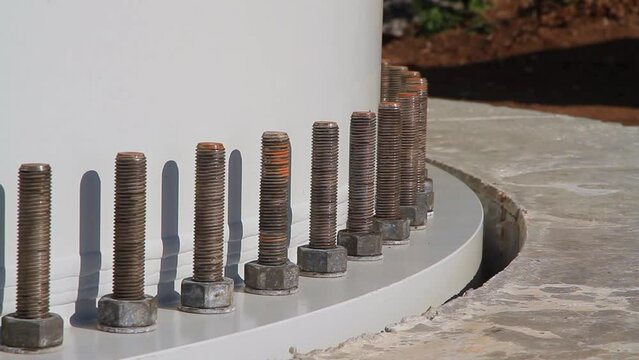
Wind Turbine Fasteners Manufacturer: Tower Bolts, Blade Bolts and Flange Bolts for Wind Energy Projects
WF Fastener is a wind turbine fasteners manufacturer and supplier for onshore and offshore wind energy projects across Asia, Europe and the Middle East, producing tower bolts, blade bolts, flange bolts, anchor bolts and T-head bolts for turbine structures. Our product program covers high strength property classes with controlled heat treatment, zinc flake and hot-dip galvanized finishes matched to the corrosion environment, and every lot ships with full material certification, hardness verification and, where specified, preload verification data.
WF Fastener — Wind Turbine Fasteners Quick Reference:
- Products: tower flange bolts, blade bolts, anchor bolts, T-head bolts, nut and washer sets
- Materials: high strength alloy steel per ISO 898-1 class 10.9, with project-specified alternatives
- Finishes: zinc flake coating (preferred for high strength classes), hot-dip galvanized where specified
- Testing: hardness verification, preload / torque testing, low-temperature impact where specified, PMI where required
- Standards: EN 14399-4 / EN 14399-8 (System HV) and ISO 898-1 referenced systems, ISO 10683 zinc flake coating, ISO 148-1 impact testing, EN 10204 3.1 / 3.2 material certificates, project specification compliance
Why Wind Turbine Bolting Is Different
Unlike static steel structures, wind turbine bolted joints experience continuous cyclic loading from rotor rotation, tower vibration and changing wind direction, and the bolted flange connections carry those loads across thousands of fatigue cycles through a 20–25 year design life. The result is that wind turbine bolts are specified as high strength, fatigue-rated fasteners with controlled preload, not as general construction bolts. The tightening procedure and the preload value are part of the design, and the fastener supply must match both the material and the assembly requirements.
In turbine assembly, bolt requirements differ mainly between tower flange joints, blade root connections and foundation anchoring systems. Each has its own loading, fatigue and corrosion profile, and each is specified separately against the OEM or project specification.
Wind Turbine Fastener Types
| Fastener | Typical Use | Key Points |
|---|---|---|
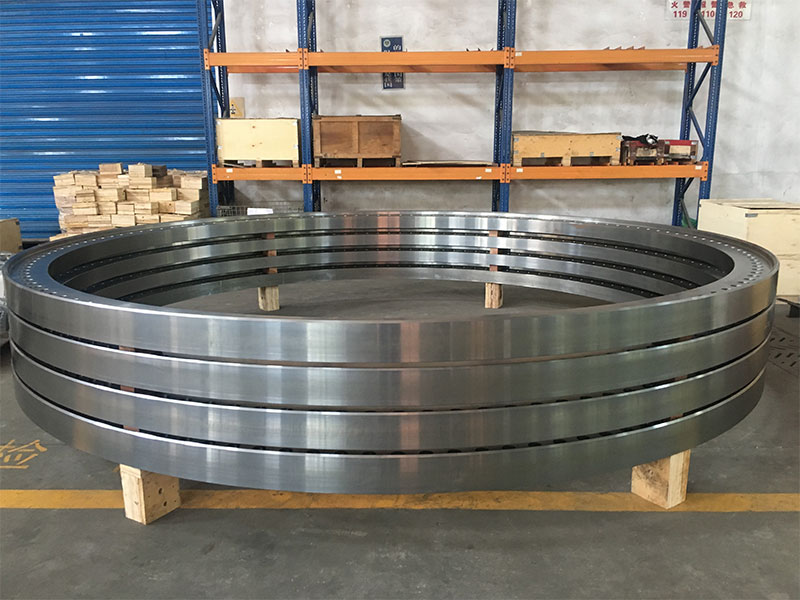
| Tower flange bolts | Connecting tower section flanges | High strength, controlled preload, zinc flake or HDG finish |
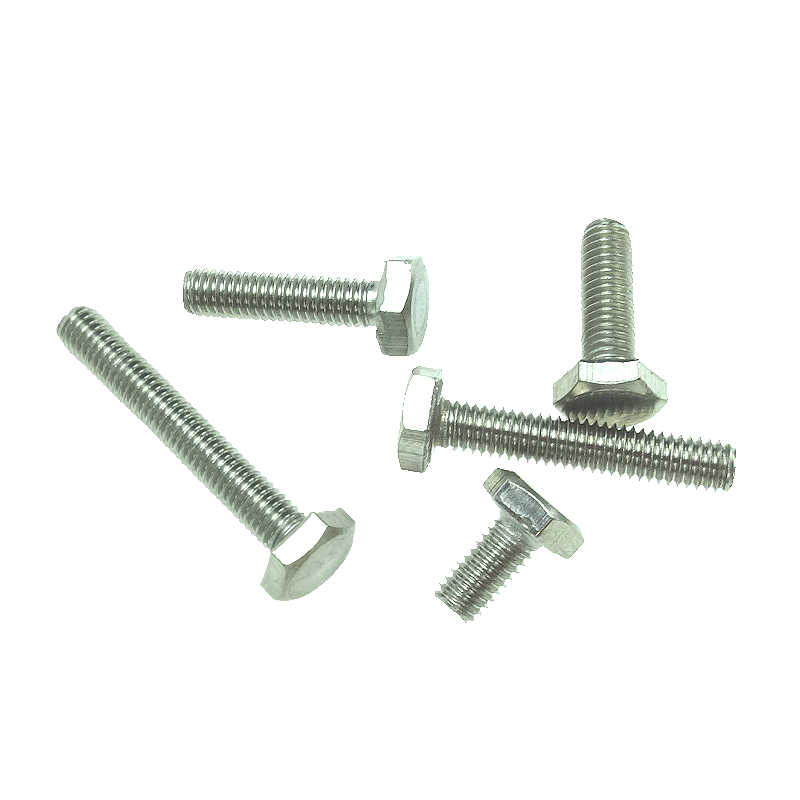
| Blade bolts / T-bolts | Blade root to hub connection | Fatigue-rated (rolled threads for optimized fatigue strength), precise thread fit, corrosion protection |
| Anchor bolts | Foundation anchor cage for the tower | Long bolts in the concrete foundation, corrosion protection over service life |
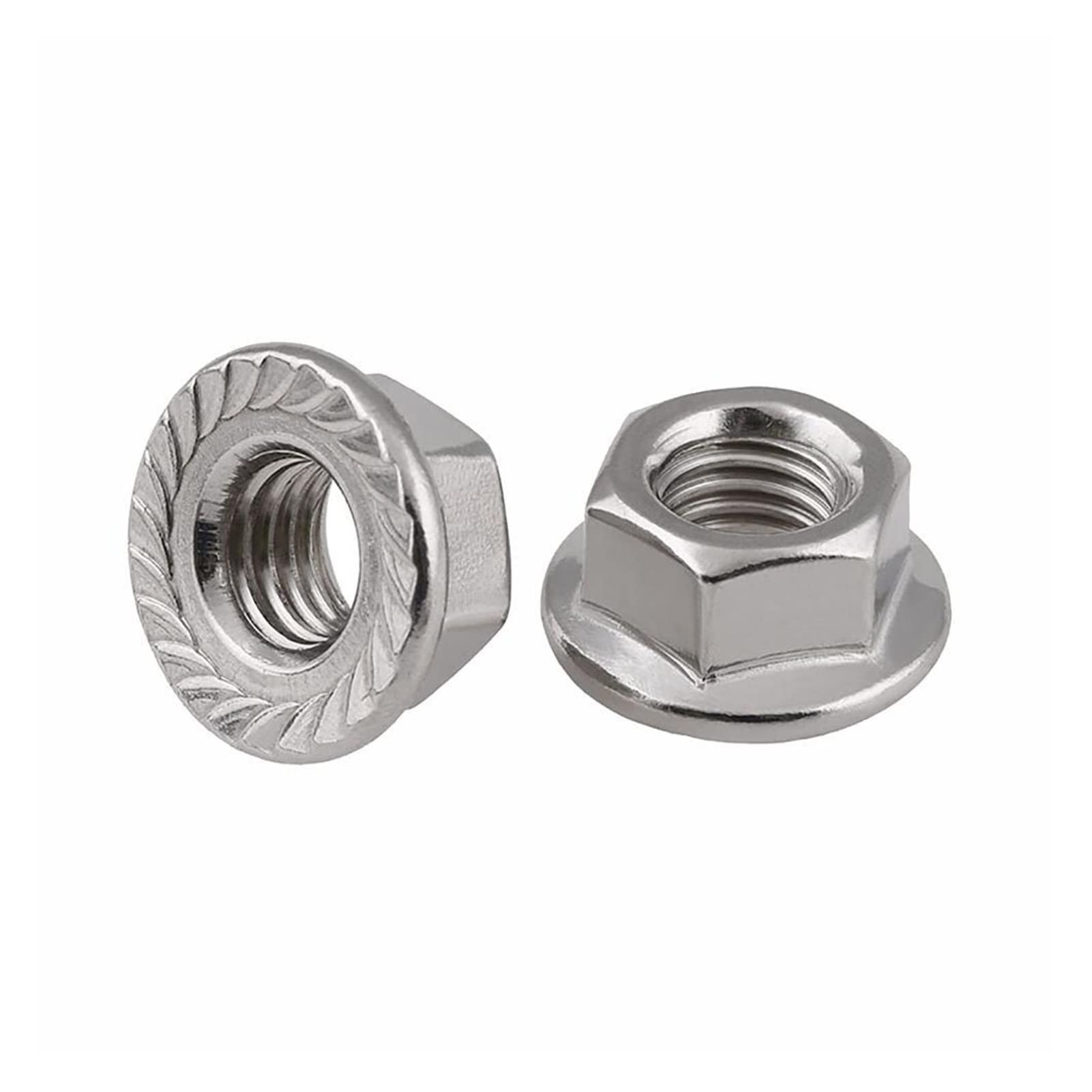
| Flange studs and nuts | Flange joint assembly | Hardness matching, washer sets, torque documentation |
| Washers and nut sets | Load distribution and preload control | Coating compatible with the bolt, surface finish control |
Blade Root Bolts and Pitch Bearing Connections
Blade root bolts carry the highest fatigue loading in the turbine: the blade weight, aerodynamic loads and cyclic bending all transfer through the blade root connection to the hub. The specification therefore covers the bolt size and grade (typically class 10.9), rolled thread fatigue performance, and the tightening procedure defined by the OEM. T-head bolts (T-bolts) are used where the blade root design requires a T-shaped head for the blade insert connection, and pitch bearing bolts carry the cyclic loads of the pitching system. Each is supplied with the thread, coating and preload documentation the OEM specification requires.
Offshore Wind Fasteners
Offshore turbine installations add a marine corrosion environment: saltwater exposure, ISO 12944-2 Class CX / C5-M corrosion classification and continuous humidity.
- Primary structural tower and blade bolts (M36–M72) — manufactured from class 10.9 alloy steel (e.g. 34CrNiMo6, 42CrMo4), specified with multi-layer non-electrolytic zinc flake coating per ISO 10683 plus an organic topcoat sealer, delivering over 1,500 hours neutral salt spray (ISO 9227) protection without hydrogen embrittlement risk or thread galling under hydraulic tensioning
- Secondary non-structural fasteners — duplex stainless steel (UNS S32205) is used for exterior brackets, cable cleats and nacelle hardware where structural preloading is lower; it is not used for primary structural high-strength bolting, which requires class 10.9 alloy steel
The documentation package for offshore projects includes the coating specification, salt spray test data where required, and the material certification covering the offshore environment requirement.
Materials and Coatings
- High strength alloy steel — class 10.9 per ISO 898-1 for tower and blade bolting, or project-specific structural bolting requirements such as EN 14399 where applicable, with controlled heat treatment (quench and temper) and hardness verification
- Zinc flake coating — preferred for class 10.9 fasteners because it avoids the high-temperature galvanizing process and is widely selected for high-strength bolting where dimensional control and hydrogen embrittlement risk management are required
- Hot-dip galvanized (HDG) — used where the project specifies it, typically for anchor bolts and lower load connections, with coating thickness matched to the environment
- Low-temperature impact testing — specified for cold-climate projects, confirming ductility at the design temperature
- PMI (Positive Material Identification) — where required, confirming alloy composition on finished parts
What the Buyer Should Specify
A correct wind turbine fasteners order states: the fastener type and size, the property class (typically ISO 898-1 class 10.9), the coating (zinc flake, HDG or project-specific), the preload / tightening requirement, and the certificate scope. For tower and blade connections, the tightening procedure is usually defined by the turbine OEM or the erection specification, typically hydraulic tensioning with controlled friction behavior of the coating (coefficient of friction in the 0.10–0.16 range for tensioner applications), and the fastener supply must be compatible with that procedure. Where the project references EN 14399-4 / EN 14399-8 (System HV), the high-strength structural bolting assemblies are supplied and documented as a complete set.
Manufacturing and Heat Treatment
- Quench and temper — controlled austenitizing, quench and temper with documented temperatures and holding times, giving the strength and toughness the class requires
- Thread rolling (RATH, roll after heat treatment) — thread rolling after heat treatment is the core fatigue process for class 10.9 blade and tower bolts, generating compressive residual stress at the thread root and the surface finish required for the fatigue test performance; thread inspection is performed per the drawing tolerance
- Hardness verification — per-lot hardness testing on finished parts, reported in the certificate package
- Preload verification — where specified, torque-tension testing confirming the torque-preload relationship for the coating system
- Low-temperature impact testing — Charpy V-notch impact testing per ISO 148-1, with minimum absorbed energy of 27 J at −20 °C or −40 °C as specified by the project
- PMI — where required, composition verification on finished parts
- Traceability — heat number marking and full traceability through the production lot
Quality and Documentation
Each production lot ships with a material certificate, hardness reports and, where specified, preload and low-temperature impact test data. EN 10204 3.1 certificates are prepared from our in-house testing laboratory and quality documentation system, with 3.2 witness inspection available through the buyer's nominated body. For turbine projects where the OEM specification requires specific documentation, the package is built to the project's requirement.
Preparing technical submittals for an onshore or offshore wind project audit? Request WF Fastener’s wind engineering qualification package — sample EN 10204 3.1 / 3.2 material certificates, 1,500-hour salt spray test reports, RATH fatigue data and Charpy V-notch impact certificates — from our quality engineering team.
Why Wind EPCs and Turbine Suppliers Choose WF Fastener
- High strength range — class 10.9 tower and blade bolts with controlled heat treatment, plus project-specified grades
- Coating control — zinc flake and HDG processes with documented coating thickness, reducing corrosion risk over the turbine service life
- Preload support — torque-tension testing and friction data for the coating system, supporting site assembly
- Full documentation — EN 10204 3.1 / 3.2 certificates and lot traceability for project submittals
- Project experience — fasteners supplied for onshore wind projects across Asia and the Middle East
OEM Drawing and Specification Review
Before production we review the turbine OEM drawing, bolt marking requirements, coating specification and inspection scope, and confirm the manufacturing program against the project requirement. This review catches specification mismatches before production, so the delivered bolts match the drawing and the documentation package matches the inspection requirement.
Sourcing and Lead Times
- Common sizes of class 10.9 bolts with zinc flake finish are available for dispatch, typically 3–4 weeks depending on size and quantity
- Anchor bolts and project-specific grades are manufactured to order, typically 4–6 weeks depending on length and testing scope
- Quotations include the material certification and coating scope, so the commercial offer matches the delivered documentation
FAQ
Q: Why use zinc flake instead of hot-dip galvanizing for wind turbine bolts?
A: Class 10.9 high-strength bolts are generally not selected for hot-dip galvanizing unless the project specification specifically controls the galvanizing process, hardness and hydrogen-related risks. Zinc flake coating provides corrosion protection while avoiding the high-temperature galvanizing process, which is why it is preferred for tower and blade bolting. HDG remains specified for anchor bolts and lower load connections where the project requires it.
Q: What property class do wind turbine bolts use?
A: Tower and blade bolts are typically ISO 898-1 class 10.9, with the grade confirmed against the turbine OEM specification. The tightening procedure and preload value are defined by the design, and the fastener supply must be compatible with the torque-preload behavior of the specified coating.
Q: Can you provide torque-tension testing for the bolts?
A: Yes, where the project requires it. Torque-tension testing confirms the torque-preload relationship for the coating system — typically zinc flake per ISO 10683 with a controlled coefficient of friction of 0.10–0.16 for hydraulic tensioner applications — and the results are included in the documentation package to support site assembly.
Q: Do you provide EN 10204 3.1 or 3.2 certificates?
A: Both. EN 10204 3.1 certificates are prepared from our in-house testing laboratory and quality documentation system; 3.2 witness inspection can be arranged through the buyer's nominated inspection body, subject to scheduling.
Q: Can you supply bolts to a specific turbine OEM specification?
A: Yes. Send the drawing or the OEM specification reference, and our engineering team will confirm the grade, coating, testing scope and documentation before quoting.
Q: What is the minimum order quantity?
A: Common sizes start from about 2,000–10,000 pieces depending on type and finish, with project-specific sizes quoted by requirement. Send the specification and our team will confirm the MOQ and lead time within one working day.
Request a quote for your wind turbine fasteners package: send the fastener types, sizes, quantity, coating and certificate scope, and our engineering team will confirm the material and testing program within one working day.
📄 Download the wind fasteners RFQ checklist — type, size, grade, coating, preload and certification requirements.
📦 Request sample bolts and MTC examples — evaluate coating quality, thread fit and preload behavior before ordering.
💬 WhatsApp engineering support — send the BOM or project inquiry directly to our team.