Custom Drawing Fasteners: Your Complete Guide to Made-to-Drawing Bolts for Renewable Energy and Grid Projects
Every EPC contractor and OEM engineer knows the moment. The structural model is locked, the steel is ordered, and then the design team sends over a joint that no off-the-shelf bolt will fit — a flange hole pattern needing an extra-long shank, a tower foundation anchor with a special bend, a threaded stud with a partial thread length that matches neither ISO 4014 nor ISO 4017, or a stainless fastener with a reduced head for a confined cavity.
That is the moment you move from catalog buying to custom drawing fastener manufacturing. At WF Fastener, this is not a side service — it is the core capability behind our renewable energy fasteners manufacturer program. We produce made-to-drawing bolts, non-standard anchors, custom studs and special fasteners for solar mounting structures, wind turbine foundations, substation steelwork and grid infrastructure across EMEA, MENA and Southeast Asia.
This guide walks you through what we need from you, how we review your drawing, the materials and processes we use, and the lead times and tolerances you can plan around.
1. When You Need a Custom Fastener Instead of a Standard Part
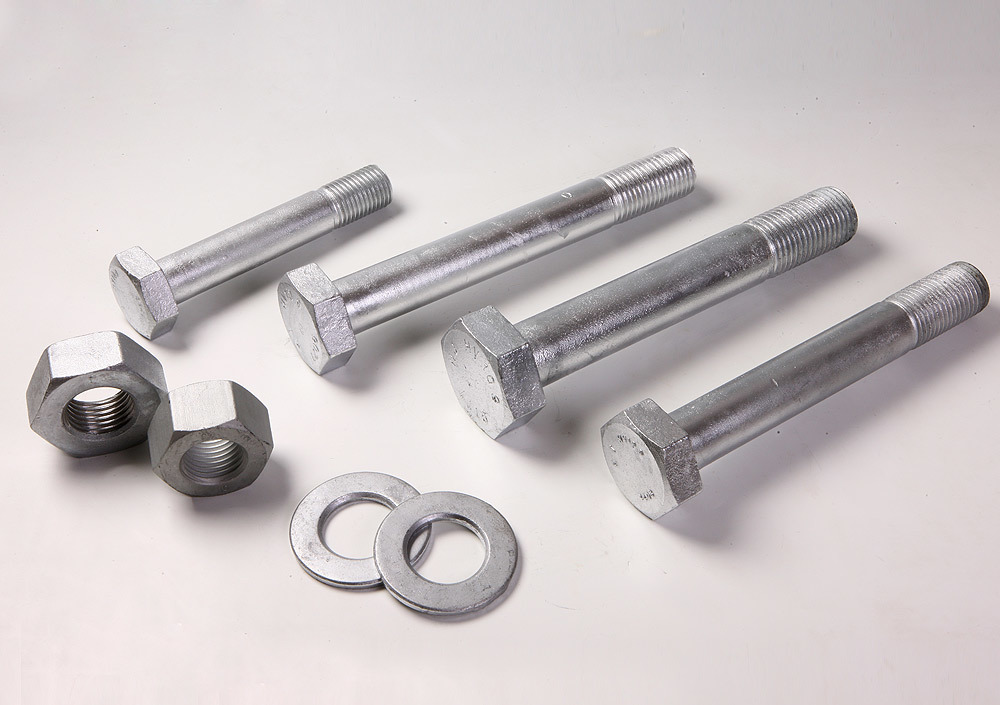
Standard fasteners — hex bolts to ISO 4014, hex screws to ISO 4017, hex nuts to ISO 4032 — cover the vast majority of joints in steel structure assembly. But they are limited to fixed thread lengths, lengths, head geometries and property classes. You go to a custom fastener manufacturer when one of the following is true:
- Geometric interference. The standard head or nut will not clear an adjacent bracket, girder or insulator. You need a reduced hex, a wafer head, a countersunk head, a square-neck carriage bolt variant, or a stepped shank.
- Non-standard length or thread engagement. The design requires a bolt longer than the longest catalog length, or a partial thread length that does not follow ISO 4014/4017 proportions (for example, 30 mm of thread on a 420 mm shank).
- Special thread form. You need a fine pitch beyond ISO 965-1 ranges, a trapezoidal or buttress thread for an adjustable anchor, a left-hand thread, or a thread with a special tolerance class.
- Material or coating mismatch with the environment. Coastal substations, desert solar farms, wind turbine nacelles exposed to salt-laden air, and geothermal installations call for materials and coatings that standard stock does not carry.
- Anchor or foundation geometry. L-bolts, J-bolts, double-anchor rods with forged feet, anchor plates welded to the shank, or cast-in channels with special threaded inserts are inherently drawing-based parts.
- Tight joint engineering. When a structural engineer has specified a precise grip length, a specific thread engagement, a machined bearing face or a set screw with a custom cup point, a catalog part will not reproduce that joint.
If your drawing falls into any of these buckets, you are in made-to-drawing territory.
2. How We Review Your Drawing: The DFM Process
A fastener drawing review is where good custom orders are won or lost. We do not simply quote what you sent us — we review it for design for manufacturing (DFM) before tooling is cut, because a small change on the drawing can halve tooling cost and eliminate a failure mode in service.
When we receive your drawing, our engineering team works through four steps:
Step 1 — Drawing completeness check
We verify that the drawing carries: all dimensions and tolerances, material designation, property class (e.g. 8.8, A2-70, A4-80), thread specification, surface finish, and any inspection or certification requirements. Missing dimensions are flagged back to you in writing — we will not guess on a structural fastener.
Step 2 — Manufacturing route selection
For each part we decide whether it should be:
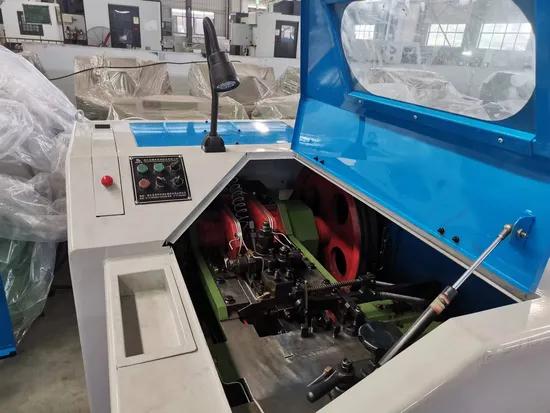
- Cold headed — economical for high-volume, smaller-diameter parts with moderate head geometry.
- Hot forged — for larger diameters (typically M24 and above), high-strength alloy grades, and complex head shapes that cold heading cannot fill.
- CNC machined — for very low quantities, tight tolerances, or geometries where forging tooling cannot be justified.
- Combination process — forged blank, then turned and threaded on CNC for precision features.
The route we choose is not always the one implied by your drawing: a simple-looking hex head may be cheaper to CNC turn in a small batch than to cut forging dies, and vice versa.
Step 3 — Tolerance and feasibility feedback
We come back to you with DFM notes: recommended tolerance relaxations where they do not affect function, suggested alternative thread lengths that still meet your joint design, and any undercuts, radii or sharp corners that will cause tool wear or stress concentration. We do this before you place the order.
Step 4 — Sample and first-article approval
For structural and safety-relevant parts, we produce a first article (often a small sample run) for your dimensional and mechanical approval before serial production. This is standard for wind foundation anchors and solar torque-tube bolts, and we build its lead time into the schedule.
3. Materials for Custom Drawing Fasteners
Material selection is driven by load, environment and code. We work across three families, using ISO, EN, DIN and UNS designations.
Carbon steel
Standard structural fastener stock for indoor, coated applications:
- Q235 / S235JR — low-cost general-purpose carbon steel, suitable for non-critical bracketry and low-strength anchors where HDG will provide corrosion protection.
- Q355 / S355JR — higher-strength structural carbon steel, the default for many hot-dip galvanized anchor bolts and base-plate fasteners in solar and grid projects.
- 45# (C45 / 1.0503) — medium-carbon steel, widely used for machined special bolts, set screws and adjuster studs where quench-and-temper strength is required without the cost of alloy steel.
Alloy steel, quenched and tempered
For high-strength structural joints — wind tower flanges, foundation anchor cages, heavy transmission substation connections:
- 42CrMo4 / 1.7228 — the workhorse of high-strength bolting, supplied and tested to property class 8.8, 10.9 and in selected cases 12.9 per ISO 898-1.
- 35CrMo / 1.7218 — slightly lower-carbon variant, common in long anchor rods and foundation bolts where toughness through section thickness matters more than peak hardness.
All alloy-steel parts are supplied with documented heat treatment: quench and temper to the specified property class, with hardness verification and, where required, impact testing at the specified temperature.
Stainless steel
For coastal, corrosive or visually exposed environments:
- A2-70 (304 / 1.4301) — austenitic stainless, standard for indoor and mildly corrosive exterior fixings, class 70 property per ISO 3506-1.
- A4-80 (316 / 1.4401, work-hardened) — molybdenum-bearing austenitic stainless for coastal substations, offshore-adjacent solar farms and MENA desert installations where chloride and atmospheric salt are present. Class 80 property per ISO 3506-1.
- Duplex and super-duplex grades (UNS S31803, UNS S32750) are available on request for highly aggressive environments such as coastal wind transition pieces and desalination-adjacent substations.
We do not substitute material grades silently. If your drawing calls for 42CrMo4 and we see a cost-saving alternative, we will propose it in writing and wait for your approval.
4. Manufacturing Capabilities: How We Build Non-Standard Bolts
Our production line is set up to handle the full range of custom geometries that renewable energy and grid projects throw at us.
Cold heading
For smaller diameters (up to roughly M16–M20 depending on grade), cold heading produces near-net-shape heads at high speed. It is the most economical route for special hex and flange head bolts in stainless and low-carbon steel, carriage and plow bolts, shoulder bolts, and small-diameter custom studs in series production. Cold heading also work-hardens the material under the head, improving fatigue performance — a genuine advantage for dynamically loaded joints in wind and vibrating equipment mounts.
Hot forging
For larger diameters and high-strength alloy grades, hot forging is the standard route. We produce heavy hex bolts and anchor bolts from M20 up to M64 and beyond; L-shaped and J-shaped foundation anchors, bent and formed hot or cold per your drawing; custom head geometries with integral bearing pads or welded anchor plates; and step shafts and shouldered bolts where a single turned part would remove too much material. Hot forging is typically where dedicated tooling (dies) is required — the reason we quote a separate tooling lead time in Section 10.
CNC machining
For low volumes, tight tolerances and complex geometries, we machine from bar stock or forged blanks. CNC is the right call when your order quantity is below the threshold that justifies forging dies, when you have turned features (precision diameters, bearing faces, spanner flats, O-ring grooves) that forging cannot hold, or when you need a one-off prototype or a replacement part for an already-installed asset. Many of our orders are a hybrid: forged near-net blank, then CNC-turned bearing face and thread relief, then threaded.
Threading
We roll and cut threads depending on the part:
- Thread rolling for production quantities — produces a stronger, work-hardened thread with better fatigue life.
- Thread cutting / chasing for large diameters, short runs and repair-style parts. We work to ISO 965-1 tolerance classes (typically 6g for external threads, 6H for nuts) unless your drawing specifies otherwise, and we can produce fine pitch, special pitch and left-hand threads on request.
5. Non-Standard Geometries We Produce Every Day
"Made to drawing" means we can reproduce what your structural engineers have designed. In practice, the most common non-standard requests we see are:
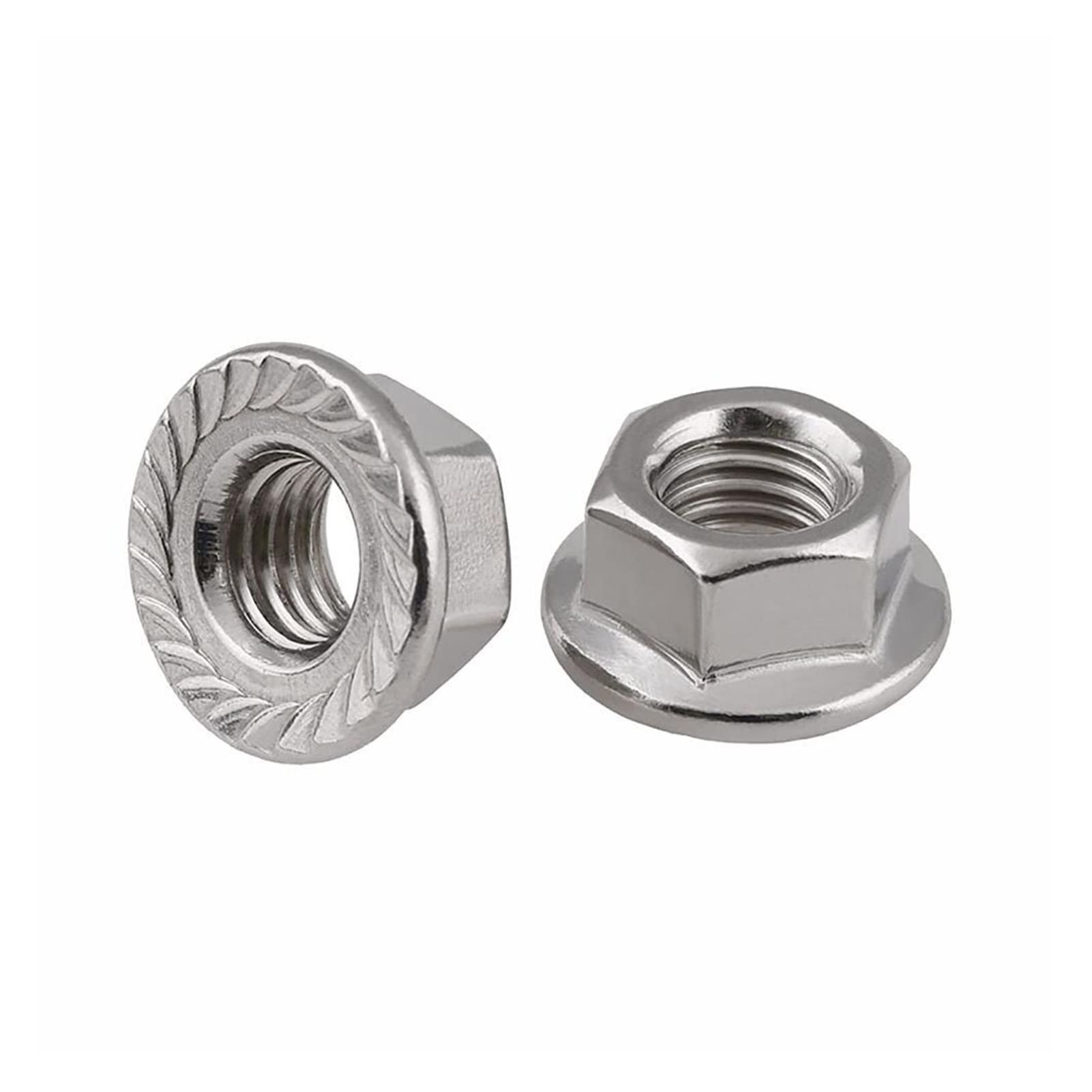
- Special head types. Reduced hex heads for clearances, flange heads with integral serrations, square heads for set screws, countersunk flat heads for flush installation, T-heads for sliding into strut channels, and custom goose-neck or bent heads.
- Custom threads. Metric fine threads beyond standard catalog ranges, unified inch threads where a legacy asset requires them (produced to drawing, dimensioned per your requirements), left-hand threads, Whitworth and trapezoidal threads for adjustable anchors, and partial or interrupted threads.
- Partial threading to a specified length. Standard ISO 4014 and ISO 4017 tie thread length to diameter. On a drawing, you can specify exactly how much thread you need — for example, 45 mm of thread on a 360 mm shank — and we will cut or roll exactly that, with the thread relief where you want it.
- Special lengths. Long anchor rods, double-ended studs, and through-bolts longer than standard catalog stock, supplied as single pieces or as assemblies with nuts and washers.
- Bent and formed anchors. J-bolts, L-bolts, U-bolts, eye bolts, and anchor rods with forged or bent feet, often supplied with welded anchor plates and hex nuts.
- Shoulder and step bolts. A larger precision-diameter shoulder acting as a register or pivot, with a smaller threaded end — common in equipment mounting and torque-tube applications.
- Weld studs and threaded inserts. For cast-in concrete connections, bridge bearings and embedded steelwork.
If you can dimension it, we can usually manufacture it. If we cannot — for example, a wall thickness below what forging can hold — we will tell you before tooling starts.
6. Tolerance Standards: ISO 4759-1 and Beyond
On a custom part, "close enough" is not a tolerance. We build to the tolerance framework your drawing specifies, anchored on these standards:
- ISO 4759-1 — tolerances for threaded fasteners. This is the default reference for property class, thread tolerance and dimensional deviations on hex bolts, screws and nuts unless your drawing specifies tighter.
- ISO 4014 / ISO 4017 — hex bolts and hex screws dimensions. When your part is a variant of a standard hex bolt (different length, different thread length, different head), we use these as the dimensional baseline and deviate only where your drawing calls for it.
- ISO 898-1 — mechanical properties of carbon and alloy steel fasteners (property classes 4.6 through 12.9).
- ISO 3506-1 — mechanical properties of stainless steel fasteners (A2-50, A2-70, A4-70, A4-80).
- ISO 965-1 / ISO 965-3 — metric thread tolerances and deviations for constructional threads.
- DIN standards where legacy or regional specifications call them out (e.g. DIN 931 / DIN 939 for historical anchor geometries, DIN 7968 for special structural bolting).
For structural joints where grip length matters, we also control the under-head fillet radius, the bearing face flatness, and the thread runout length — the features that actually transfer load into the steelwork, and the ones most often missing from a simplified catalog part.
When you send your drawing, tell us which tolerance class governs. If it is silent, we default to ISO 4759-1 for the relevant property class and confirm in writing before production.
7. Surface Treatments for Coastal, Industrial and Outdoor Exposure
A high-strength bolt that corrodes is a failed bolt, however precisely it was made. We apply the following treatments based on your environment:
Hot-dip galvanizing (HDG)
The default for outdoor structural steelwork in solar mounting, transmission and substations. Applied to ISO 4014/4017 variants and anchor bolts to ISO 10684, with associated over-tapping of nuts to clear the galvanizing thickness. HDG is the standard choice for inland and moderately corrosive sites, and is specified on the majority of our wind foundation anchor orders.
Zinc-flake coating
For high-strength parts (10.9 and 12.9) where the hydrogen-embrittlement risk of electroplating is a concern, zinc-flake coatings (Geomet and Delta-Protekt equivalents, applied per system-processor specifications) provide good corrosion performance without the baking risk. This is the preferred finish on dynamically loaded wind bolting and on parts in MENA desert environments where UV and temperature cycling are harsh.
Mechanical plating
For smaller carbon-steel parts where a uniform, low-hydrogen zinc or zinc-alloy coating is needed at lower cost than HDG. It avoids the high-temperature immersion that can distort small or complex geometries.
Passivation and electropolishing
For stainless A2-70 and A4-80 parts, passivation removes free iron and restores the passive oxide layer. Electropolishing is available for hygienic or highly corrosive installations.
We always account for coating thickness in the thread tolerance — an HDG M20 bolt does not use the same nut as an uncoated M20 bolt, and we supply the matched pair as an assembly where your drawing requires it.
8. Quality Assurance: EN 10204 3.1 and 3.2 Certification
For renewable energy and grid projects, the mill test certificate (MTC) is not optional paperwork — it is the document the EPC and independent engineer will audit at handover.
We supply:
- EN 10204 3.1 certification as standard. A mill/manufacturer-issued certificate confirming that products comply with the order specification, accompanied by actual test results: chemical composition, tensile strength, yield strength, hardness, and where applicable impact values.
- EN 10204 3.2 certification on request. An independent-inspection certificate, countersigned by a third-party inspector you nominate (TÜV, SGS, BV, Intertek or equivalent). Required by many wind turbine OEM specifications and utility-scale solar EPC contracts.
- Dimensional inspection reports on first articles and production lots, covering thread fit (go/no-go gauges), length under head, head height, across-flats, and any special features on your drawing.
- Mechanical testing to the governing property class per ISO 898-1 or ISO 3506-1, with witness testing available for 3.2 lots.
For project-based orders, we can also build a quality plan (ITP) — agreed hold points, witness points and documentation requirements — so there are no surprises at final inspection. This is standard on large wind farm anchor packages and substation orders where multiple steelwork vendors feed one civil scope.
9. What to Include in Your Drawing or RFQ (Checklist)
The faster we can review and quote your custom fastener, the faster your project moves. To avoid back-and-forth emails, include the following in your RFQ package — this is the checklist we send to every new customer:
Drawing and geometry
- A dimensioned drawing (PDF or CAD) in metric units, with all critical dimensions, tolerances and the required surface finish called out.
- The quantity and any broken sizes (if multiple diameters/lengths in one package).
- The target delivery date and any milestone dates (e.g. steel erection start).
Material and strength
- Material grade (e.g. 42CrMo4, 316/A4-80, Q355).
- Required property class (e.g. 8.8, 10.9, A4-80).
- Whether the part is welded, hot-dip galvanized, or otherwise processed after fabrication.
Thread details
- Thread specification (e.g. M24 × 3 — 6g, fine pitch, left-hand).
- Thread length or engagement length if non-standard.
- Whether nuts and washers are part of the same order, and their required grade.
Surface and corrosion protection
- Required finish (HDG per ISO 10684, zinc-flake, mechanical zinc, passivated, plain).
- Any salt-spray or coating-thickness requirement from your project specification.
Inspection and certification
- Required MTC level (EN 10204 3.1 or 3.2).
- Any third-party inspection, witness testing or ITP requirement.
- Any OEM-specific approval (e.g. a wind turbine manufacturer's bolting specification) the parts must meet.
Application context (optional but very helpful)
- What the fastener connects (foundation to base plate? torque tube to purlin? tower flange?).
- Whether the joint is subject to dynamic load, vibration or thermal cycling.
- Whether a sample or first-article approval is required before mass production.
Send this to our engineering team and you will get back a DFM feedback note and a firm tooling + production quote within two working days.
10. Lead Times, MOQs and How to Start
Our typical lead times:
- Tooling and die preparation: 3–4 weeks from drawing approval. This applies to forged and headed parts that require dedicated dies. Pure CNC-machined parts skip this step.
- First article / sample: typically 1 week after tooling, for your dimensional approval.
- Production: 2–3 weeks for a standard production run after sample approval.
- Surface treatment: add 1 week for HDG, 3–5 days for zinc-flake.
Realistically, plan on 6–9 weeks end-to-end from drawing approval to delivery for a forged custom anchor package, and 2–3 weeks for a CNC-machined low-volume order. These are typical, not guaranteed — we confirm against your quantity and our current shop load in writing.
Minimum order quantities (MOQs): for cold-headed and forged custom parts, MOQ is typically 500–1000 pieces depending on diameter and complexity. Below that, we usually route the order through CNC machining, which has effectively no MOQ but a higher per-piece cost. For large structural anchors (M36 and above), we have run successful orders below 200 pieces on a machined or forged-blank basis — ask, because the economics depend heavily on the geometry.
If you are sourcing for a wind or solar project, you may also find our dedicated capability pages useful: wind turbine fasteners covers foundation anchors, tower bolting and nacelle hardware, and solar mounting fasteners covers clamp, rail and torque-tube fixings. Both draw on the same custom drawing capability described here.
Frequently Asked Questions
Q: Can you manufacture a fastener from a sketch, or do I need a fully dimensioned drawing?
A: We can work from a sketch for early feasibility and pricing, but production requires a fully dimensioned drawing with material, property class and thread specification. We flag any missing dimensions in our DFM review and help you close them out — we will not produce a structural fastener from an assumption.
Q: What is the smallest and largest diameter you can produce?
A: We routinely produce custom fasteners from M6 up to M64, with larger specials (up to roughly M100) on a machined or forged-blank basis. Long anchor rods up to 6 meters or more can be supplied in one piece or as coupled assemblies depending on transport and handling.
Q: Do you supply matched nuts and washers with the bolts?
A: Yes. For HDG parts, the nuts are over-tapped to ISO 10684 to clear the coating thickness. For high-strength structural joints, we supply the nut and washer to the matched property class (e.g. 10.9 bolt with 10 nut, hardened flat washer) as an assembly.
Q: Can you handle an urgent replacement order for an already-installed project?
A: Often yes. CNC-machined specials can be turned around in 2–3 weeks for emergency replacements. For forged parts, lead time is longer, but we prioritize replacement orders for clients whose installation schedule is at risk. Tell us the site commissioning date and we will work backwards.
Q: Do you provide 3.2 certification with third-party witness inspection?
A: Yes. We regularly supply EN 10204 3.2 certificates countersigned by TÜV, SGS, BV or the inspector you nominate, with witness testing arranged at our works before dispatch.
Q: Can you reverse-engineer a worn or broken fastener where the original drawing is lost?
A: Yes — we measure an incoming sample, produce a sample drawing, and manufacture to it after your written approval. This is common for legacy substation and industrial asset support. We recommend a 3.1 certificate on the first batch so you have a documented baseline.
Related Guides
- Renewable Energy Fasteners Manufacturer — Solar, Wind and Grid — our center page covering the full range of bolting we supply to solar, wind and grid projects.
- Wind Turbine Fasteners: Foundation Anchors, Tower Bolting and Nacelle Hardware — deep dive on the bolting spec, materials and coatings specific to onshore and offshore wind.
- Solar Mounting Fasteners: Clamps, Rail Bolts and Torque-Tube Fixings — how we supply custom and standard hardware for ground-mount and rooftop solar structures.
Ready to Start Your Custom Fastener Order?
If you have a drawing in hand, send it to our engineering team for a free DFM review and quotation — we will come back within two working days with manufacturing route, tooling cost, lead time and any design feedback, no obligation.
If you are still in the design phase and want to talk through the joint first, book an engineering call with our fastener team. Tell us what the fastener connects, the load and the environment, and we will help you land on a geometry that is manufacturable, certifiable and cost-effective. For quantity tenders on wind farms, utility-scale solar plants or substation packages, ask for our project account quote — we can structure tooling amortization, batch deliveries and 3.2 inspection to match your EPC schedule.